
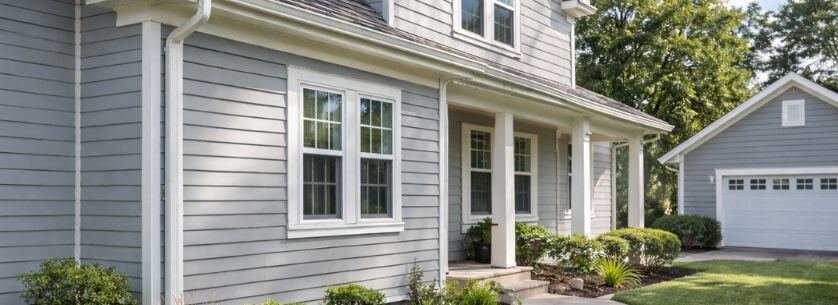
Massachusetts homeowners and property managers face a unique combination of environmental challenges. From freezing winters and heavy snowfall to coastal moisture and seasonal temperature swings, exterior materials must perform consistently under stress. Choosing the right siding is not just about aesthetics: it is a long-term structural and financial decision.
Fiber cement siding has become one of the most reliable solutions for properties in cold climates. Its durability, resistance to weather extremes, and low maintenance requirements make it particularly well-suited for conditions found throughout Massachusetts.
Understanding the Climate Challenges in Massachusetts
Massachusetts experiences wide seasonal variation. Winters often bring sub-freezing temperatures, snow accumulation, and ice formation, while summers can be humid and warm. Coastal areas also face salt exposure and wind-driven moisture.
These conditions create several risks for exterior materials:
- Freeze-thaw cycles that cause expansion and contraction
- Moisture infiltration leading to rot or mold
- Warping or cracking from temperature fluctuations
- Increased wear from wind and debris
Traditional siding materials such as wood or vinyl may struggle under these conditions over time.
What Is Fiber Cement Siding?
Fiber cement siding is a composite material made from cement, sand, and cellulose fibers. This combination creates a dense, stable product that mimics the appearance of wood while offering significantly improved durability.
It is manufactured to resist environmental stress, making it suitable for regions with demanding weather patterns.
Key Advantages for Cold Climates
Resistance to Freeze-Thaw Damage
One of the primary concerns in cold regions is the repeated freezing and thawing of moisture. Materials that absorb water can expand and crack when temperatures drop.
Fiber cement siding is engineered to minimize water absorption, reducing the risk of structural damage during winter months.
Dimensional Stability
Unlike vinyl siding, which can expand and contract noticeably with temperature changes, fiber cement maintains its shape. This stability helps prevent gaps, buckling, and long-term wear.
Moisture and Rot Resistance
Wood siding is vulnerable to moisture-related issues such as rot, swelling, and mold growth. Fiber cement does not provide a food source for mold and is highly resistant to moisture damage.
This is particularly important in coastal areas and regions with frequent precipitation.
Wind and Impact Durability
Massachusetts properties, especially near the coast, can experience strong winds and storms. Fiber cement siding offers higher impact resistance compared to many alternatives, helping protect the building envelope.
Fire Resistance
Fiber cement is non-combustible. While this may not be the primary concern in cold climates, it adds an additional layer of safety for residential and commercial properties.
Long-Term Cost Efficiency
Although fiber cement siding typically has a higher upfront cost than vinyl, it often delivers better value over time.
Factors contributing to long-term savings include:
- Reduced maintenance requirements
- Longer lifespan compared to wood or vinyl
- Lower risk of repair due to weather damage
When evaluated over 20–30 years, fiber cement can be a more cost-effective investment.
Aesthetic Versatility
Fiber cement siding is available in a wide range of styles, textures, and finishes. It can replicate the appearance of natural wood, including clapboard and shingles, without the associated maintenance.
This allows homeowners to achieve traditional New England architectural styles while benefiting from modern performance.
Installation Considerations
Proper installation is critical to maximizing the performance of fiber cement siding. It requires specific tools and expertise due to its weight and composition.
Working with experienced professionals ensures:
- Correct sealing and flashing
- Proper spacing and fastening
- Compliance with manufacturer guidelines
Incorrect installation can compromise durability, regardless of material quality.
Is Fiber Cement the Right Choice for Your Property?
For most residential and commercial properties in Massachusetts, fiber cement siding offers a strong balance of durability, performance, and appearance.
It is particularly suitable for:
- Homes exposed to harsh winter conditions
- Coastal properties with moisture and salt exposure
- Owners seeking long-term value with minimal maintenance
Selecting siding for a cold climate requires careful consideration of environmental stress factors. Fiber cement siding addresses many of the limitations found in traditional materials, providing a durable and reliable solution for Massachusetts properties.
Its resistance to moisture, temperature fluctuations, and physical impact makes it a practical choice for those looking to protect and enhance their buildings over the long term.